Free Medicare help is available 800-333-4114

Making Medicare and Medicaid Work Better Together

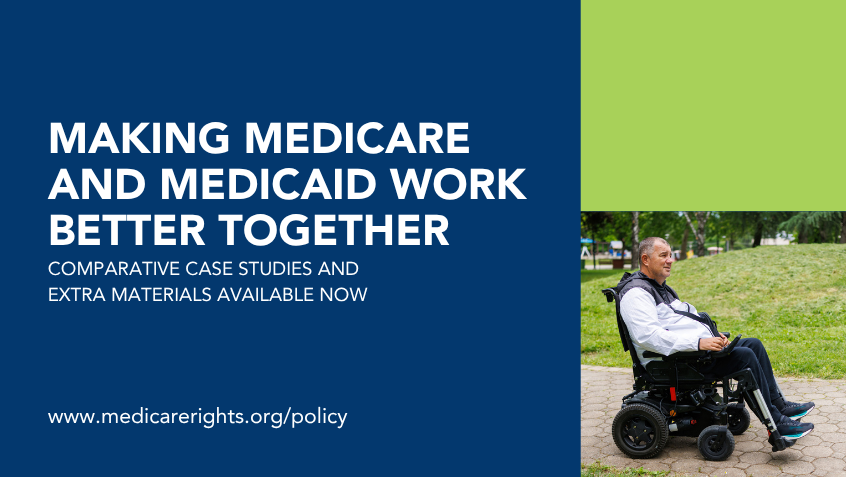
Making Medicare and Medicaid Work Better Together is a case study series from the Medicare Rights Center that explores what happens when Medicare and Medicaid fail to coordinate and how those breakdowns affect real people. Drawing on eight case examples from Medicare Rights’ national helpline, the series highlights common challenges such as coverage gaps, service disruptions, and barriers in appeals and integrated plans, while offering policy solutions to improve care for people eligible for both programs.

This work was supported in part by Arnold Ventures. Medicare Rights Center maintains full editorial control over all of its policy analysis and communications activities.

Resources in This Series

Positions and Publications

Closing Gaps in Benefits and Services

In <em>Closing Gaps in Benefits and Services</em>, the case study examines how differences in Medicare and Medicaid coverage rules, vendors, and plan structures can create barriers to essential services like transportation. Mrs. W’s experience shows how limited integration and misleading expectations around supplemental benefits can leave beneficiaries with less access to care than before, while Mr. L’s story demonstrates how more aligned or integrated plans can simplify access and reduce administrative burdens. Together, these examples highlight the need for clearer plan information, stronger oversight of supplemental benefits, and greater alignment between Medicare and Medicaid to ensure beneficiaries receive the services they need.

Download PDF
Positions and Publications

Fixing the Appeals Process

In <em>Fixing the Appeals Process</em>, the case study contrasts two beneficiary experiences to show how fragmented versus integrated systems impact access to care. Mr. H’s story illustrates the confusion and delays that arise when Medicare and Medicaid appeals operate separately, leaving him caught between two plans and unsure how to secure coverage for a medically necessary wheelchair feature. In contrast, Mrs. Z benefits from an integrated appeals system that streamlines decision-making and reduces administrative burden, ultimately improving her access to needed services. Together, these examples underscore the importance of aligning Medicare and Medicaid processes and inform policy recommendations aimed at simplifying appeals and strengthening care coordination.

Download PDF
Positions and Publications

Improving Care Coordination

In <em>Improving Care Coordination</em>, the case study contrasts the consequences of weak versus effective care coordination across Medicare and Medicaid. Ms. T’s experience shows how limited integration and inadequate plan support can lead to improper billing, unresolved provider issues, and ultimately a disruption in care when her therapist drops her. In contrast, Mr. Y’s story demonstrates how strong care coordination within a fully integrated plan can proactively protect access to critical services, including uninterrupted 24-hour home care. Together, these examples highlight the essential role of care coordination in reducing administrative burden, preventing care disruptions, and improving outcomes for dually eligible individuals.

Download PDF
Positions and Publications

Stopping Coverage Loss and Disruption

In <em>Stopping Coverage Loss and Disruption</em>, the case study focuses on “churn,” or the loss and regaining of coverage, and how it can interrupt care and destabilize integrated plans. Mrs. E’s experience shows how administrative errors in Medicaid recertification can lead to the loss of both Medicaid and integrated D-SNP coverage, resulting in higher costs, missed care, and fragmented services. Mr. V’s story highlights how misleading marketing and confusion about plan options can push beneficiaries out of highly integrated coverage into less coordinated plans, putting critical services like home care at risk. Together, these cases underscore the need for stronger safeguards, clearer communication, and streamlined processes to prevent unnecessary coverage disruptions and protect access to care.

Download PDF

Videos

Infographics

Have a Medicare question? - Poop

Our trained counselors are here to help — free, confidential, and personalized to your situation. - Poop

800-333-4114 Monday - Friday, 9 AM - 5 PM ET Get Help - Poop →

Become a Medicare Champion

2,400+ Champions stand with older Americans. Your gift keeps the helpline free, the policy work loud, and the next 30 years possible. Will you join them?

Become a Champion →